Most clinics say lazy eye can't be corrected after childhood. We have spent 15 years proving otherwise. No surgery. No daily patching. Adults and children welcome.
The old belief: "Lazy eye must be treated before age 7 to 9 — after that, nothing can be done." Modern neuroscience — and 3,200 treated patients — say otherwise. Both children and adults can recover.
What kind of lazy eye are you facing?
Choose your situation — we'll show you exactly what's possible.
Early intervention leads to the fastest results. Our approach replaces daily patching with targeted brain training — and treats the root cause, not just the symptom.
See children's treatment → Any ageYou may have been told it's too late. Modern neuroscience disagrees. Dr. Stanley has treated hundreds of adults who were turned away by other specialists.
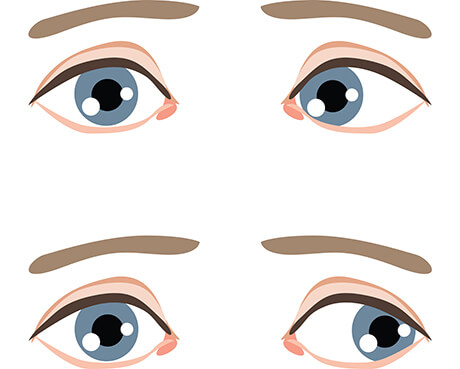
See adult treatment →Lazy eye is not just a vision problem. When the brain suppresses one eye, the effects reach far beyond sight — impacting learning, coordination, and confidence. Many children go undiagnosed for years because they pass standard eye chart tests. They don't know their vision is abnormal because they have never experienced anything different.
Warning signs in childrenSkipping words, losing place — labelled as slow when vision is the real issue.
Poor eye-hand coordination affects writing, drawing, and sports performance.
Low confidence and self-esteem that can persist into adulthood if untreated.
Ready to find out if your child can be helped?
The assessment is free. No commitment required.
For decades, the advice was that lazy eye could only be treated before age 7 to 9. That belief has been overturned by modern neuroscience. The brain retains plasticity throughout life — the same mechanism behind stroke rehabilitation allows adults to retrain their visual system entirely.
How it affects adult life
Some adults end a desk-based working day feeling as if they had just run a 10km race — purely from the effort of forcing both eyes to function when the visual system is working against them.
Been told nothing can be done?
Book a free assessment and get a clear answer.
The difference between conventional treatment and what we offer is not marginal — it is fundamental.
| Sun Time Neuro Vision Therapy | Traditional Patching / Surgery | |
|---|---|---|
| Works for adults | Yes — treatment at any age | Rarely — only effective under age 7–9 |
| Addresses brain suppression | Yes — retrains neural pathways | No — targets the eye, not the brain |
| Restores 3D & depth perception | Yes — binocular vision is the defined goal | No — not a treatment goal |
| Daily patching required | Not required | Hours daily |
| Surgical risk | None | Surgical risk, may need repeats |
| Personalised program | Yes — every case managed individually | Standard protocols |
Vision happens in the brain, not the eye. Prescribing glasses or patching one eye doesn't retrain a brain that has learned to suppress vision. Every program is individualised, every session is supervised, and every outcome is measured.
A 1.5-hour assessment covering binocular vision, eye-brain coordination, depth perception, and visual processing. Far beyond anything in a standard eye test. A separate consultation follows to present findings and discuss the recommended program.
Every case is unique. Your program is built around your specific evaluation results and daily life — not copied from a template. Different modalities are combined as needed: vision therapy, lens therapy, and syntonic light therapy.
One to two sessions per week using prisms, filtered lenses, computerised systems, and interactive programs. Children's sessions are designed to be engaging. Adult sessions fit around working schedules.
Targeted exercises between sessions reinforce clinic work and accelerate progress. Some patients also use computer-based programs at home.
Progress is documented at every visit. The therapy permanently alters the nervous system's reflexive behaviour. When the program is complete, the results last for a lifetime.
Unlike orthoptics, which only trains eye muscles, our therapy addresses the entire visual brain system.
Pursuit & Saccade Therapy
Visual-Vestibular Therapy
Visual Perceptual Therapy
Eye-Hand Coordination
Accommodative Therapy
Visual Attention Therapy
Peripheral Awareness
Visual-Spatial Awareness
Visual-Auditory Integration
Orthoptics
Specific wavelengths of light activate different parts of the eye and brain — helping them work better together. Administered under Dr. Stanley's FCSO fellowship certification. Supported by peer-reviewed research published in 2022.
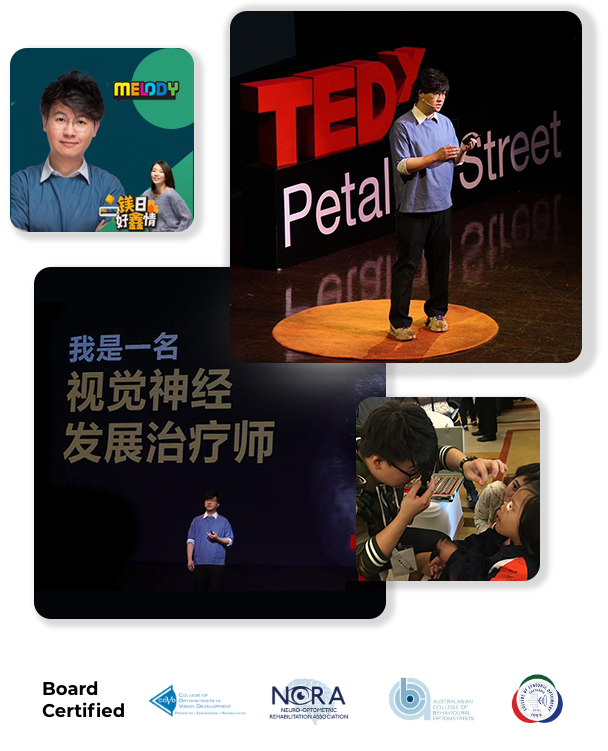
Only 2 optometrists in all of Asia hold this combination of international fellowships. Dr. Stanley Tien is one of them.
Neuro-Developmental & Behavioral Optometrist
BSc (Hons) · MEd · DOpt
Fellow, College of Optometrists in Vision Development (USA) — advanced competency in vision therapy and binocular vision
Fellow, Australasian College of Behavioural Optometrists — specialist in vision development
Fellow, College of Syntonic Optometry (USA) — specialist in light therapy for vision conditions
Fellow, Neuro Optometric Rehabilitation Association — neurological vision conditions
University of Malaya Medical Centre, Rehabilitation Department
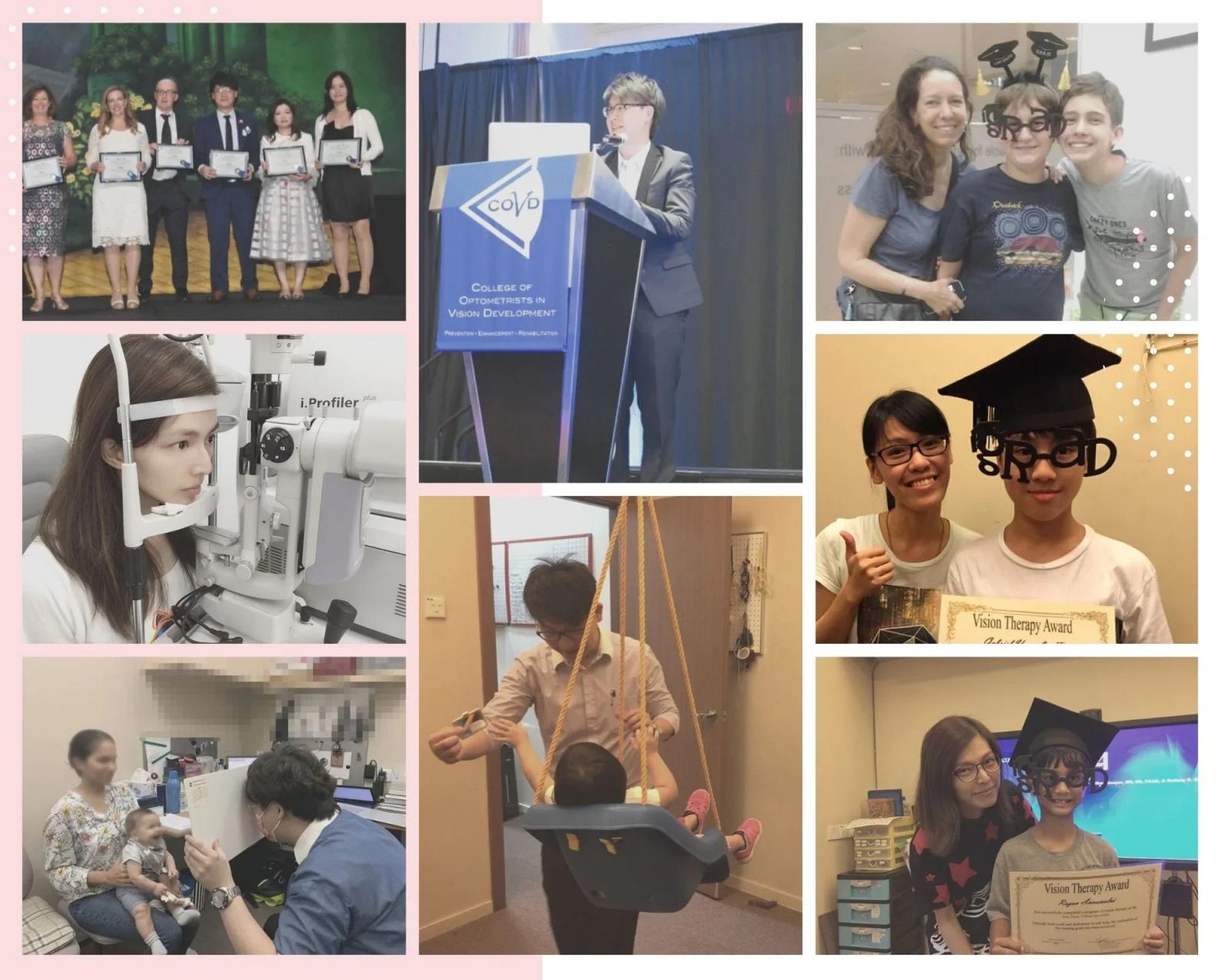
Real, documented outcomes from patients treated at Sun Time Vision Specialist.
"Two specialists told us our daughter needed surgery. We tried vision therapy instead. Within months she developed 3D vision she had never had. We are now moving to Germany — she is a different child."
"Ashlee was prescribed daily patching — she cried every time. We drove 3 hours each way for her sessions. In under 2 months she went from blurry vision to full 3D vision and improved depth perception."
"Hadif had lazy eye, focusing problems, and poor coordination. Surgery was recommended. After vision therapy, his vision improved — and beyond that, his behaviour, confidence, and personality transformed."
Start with a comprehensive 1.5-hour neuro-vision evaluation. Dr. Stanley will assess your case fully and present a clear treatment plan. No obligation.